
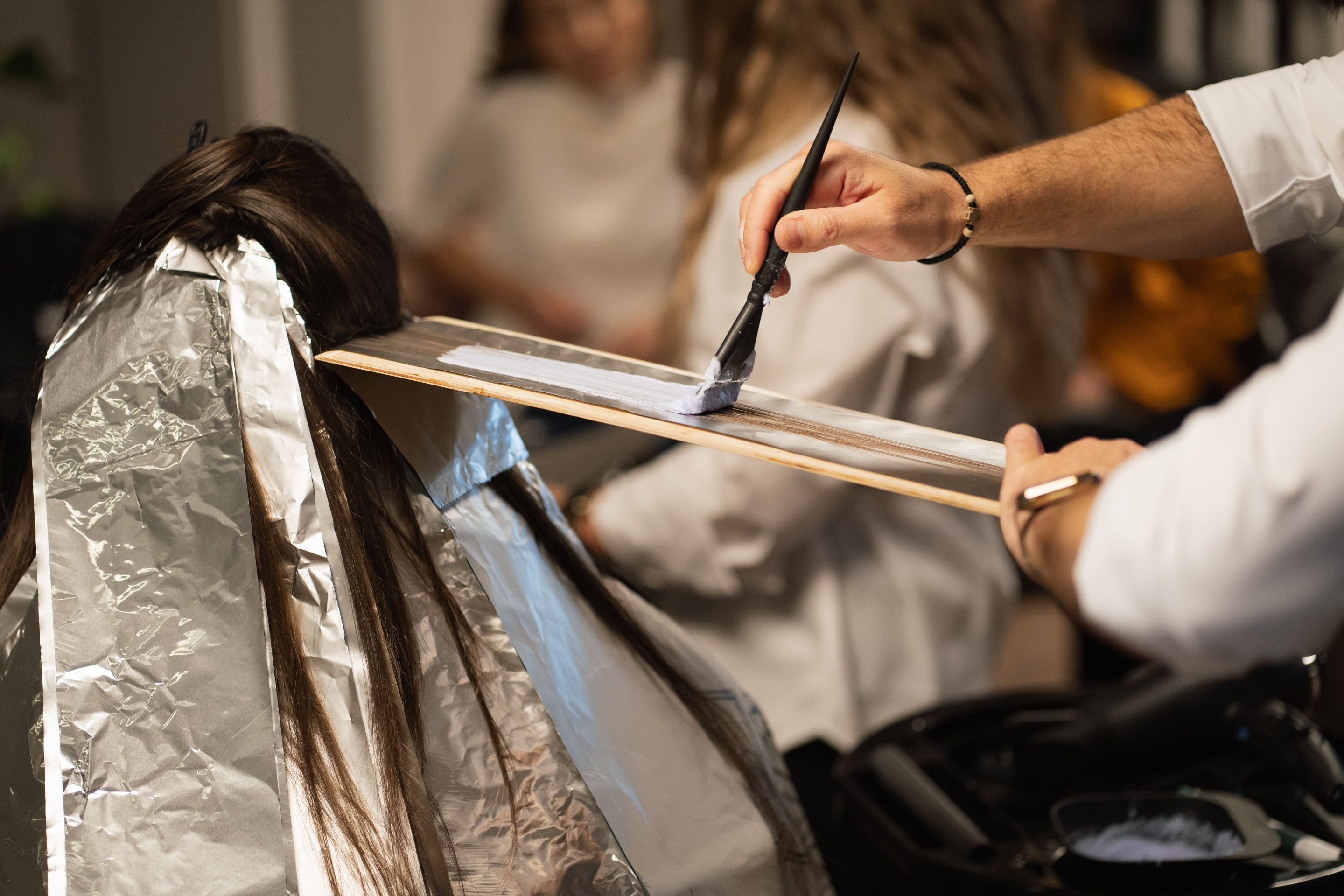
You went in wanting soft, sun-kissed balayage. You came out with brassy orange stripes and a line of demarcation you can spot from across the room.
Or maybe you tried to save a few dollars with a box dye at home, and now your hair is three different colors depending on the light.
If any of this sounds familiar, you don’t need a new haircut, you need hair color correction.
As colorists at Salon D, Dallas’s award-winning hair salon near the Galleria, we see color correction cases nearly every week: DIY dye jobs gone sideways, botched bleach and balayage from other salons, brassy blondes, muddy brunettes, and color that’s faded into something nobody asked for.
This guide breaks down exactly what hair color correction is, the techniques colorists use to fix it, how to tell when a mistake is a DIY fix versus a job for a professional, and what to expect from the process, cost, timeline, and aftercare included.
What Is Hair Color Correction?
Hair color correction is a specialized colorist service that diagnoses and repairs unwanted results from a previous coloring treatment, whether that treatment happened at home or in another salon chair.
Unlike a standard color appointment, where a stylist is building color on a relatively predictable base, correction work starts by reverse-engineering a problem: what pigments are already in the hair, why the color looks the way it does, and how to neutralize or rebuild it without destroying the hair’s integrity.
At its core, color correction relies on color theory, using the color wheel to cancel out unwanted pigment.
- Orange and brassy tones are neutralized with blue-based toners.
- Green tones (a common result of over-toning blonde hair) are corrected with red or copper-based pigment. Purple or violet buildup is offset with yellow.
A skilled colorist reads your hair the way a mechanic reads an engine, then builds a formula and a treatment plan around what they find.
It’s important to understand that color correction is a process, not a single product or a single visit.
Depending on how much damage or how many layers of pigment are involved, it can take one appointment or several sessions spaced weeks apart.
Common Reasons You Might Need Color Correction
Most color correction appointments at our Dallas salon fall into a handful of recurring categories.
DIY Box Dye Mishaps
At-home color kits are formulated for average conditions and don’t account for your hair’s existing color, porosity, or previous treatments, which is why they so often turn out patchy, too dark, or an unnatural tone.
Brassy or Ashy Tones
Blonde hair that’s lifted without enough toning often develops yellow, orange, or brassy undertones, especially with Dallas’s hard water and sun exposure. Brunette hair can go the opposite direction and turn flat, muddy, or ashy.
Uneven, Patchy, or Banded Color
Visible stripes, a hard line where new color meets old growth, or blotchy sections usually mean the product wasn’t applied or processed evenly.
A “Salon Fail” From Elsewhere
Not every colorist has the training for advanced lighting or corrective work, and even skilled stylists can misjudge a formula on unfamiliar hair.
Color That’s Faded or Oxidized
Over time, chlorine, sun, and product buildup shift your original shade into something duller or warmer than intended.
Overlapping Color on Previously Highlighted or Balayage Hair
Reapplying color without accounting for existing highlights often creates dark bands or uneven saturation.
Botched Bleach and Blonding Attempts
Over-processed hair can end up with uneven lift, orange or yellow bands, and compromised strength that needs to be stabilized before any new color goes on.
If you’re dealing with any of these and searching “hair color correction near me” or “why did my hair turn orange,” you’re not alone, and it’s fixable with the right approach.
How the Professional Hair Color Correction Process Works
A proper correction isn’t a single formula applied and rinsed. It’s a structured process, and at Salon D, it typically looks like this.
1. Consultation and Hair Diagnosis
Every correction starts with an in-depth consultation. Your colorist examines your hair’s current color, underlying pigment, porosity, elasticity, and overall condition, and asks about your color history, every box dye, every salon visit, every chlorine-heavy summer counts.
This is also where realistic expectations get set. Not every correction can be completed in one visit, and an honest colorist will tell you that upfront rather than promising a same-day miracle.
2. Strand Testing
Before any full application, a strand test is often done to see how your hair reacts to the planned formula.
This step matters even more if your hair has been color-treated multiple times, since previous chemical processes change how new color and lighteners behave.
3. Color Removal or Lightening
If there’s too much unwanted pigment in the hair, a colorist may use a professional color remover or a controlled lightening process to strip out the buildup without over-processing the hair.
This is different from bleaching at home, professional lighteners are formulated and timed to lift color while minimizing damage.
4. Filling and Toning
Hair that’s been over-lightened often needs a color filler before new color is applied, which replaces lost warmth or pigment so the final color deposits evenly instead of turning gray, green, or muddy.
Toning then neutralizes any remaining brassiness or off-tones using the color-wheel principles mentioned earlier.
5. Redepositing and Blending
Once the base is corrected, your colorist rebuilds toward your target shade, often using a combination of lowlights, highlights, or a gloss/glaze to blend everything into one seamless, natural-looking result and soften any remaining demarcation lines.
6. Bond-Building and Repair Treatments
Because correction work often involves lightening, most professional colorists incorporate bond-building treatments (like Olaplex) during the process to protect hair strength.
This is one of the biggest differences between salon correction and a DIY fix,professionals are actively working to preserve hair integrity while they’re fixing color, not just chasing the shade.
Signs You Need a Professional Colorist (Not a DIY Fix)
Some minor color issues, like a slightly-too-dark semi-permanent gloss, can fade or be adjusted with an at-home toning shampoo.
But there’s a clear line where DIY fixes stop working and professional correction becomes necessary:
- Your hair has visible orange, yellow, or green tones that a purple or blue shampoo hasn’t touched
- There are hard lines of demarcation between old and new color
- Your hair feels straw-like, breaks easily, or has lost elasticity after bleaching
- Multiple box dyes have been layered on top of each other
- You’ve tried an at-home “fix” and it made things worse
- The color is uneven across sections, or roots and ends are drastically different shades
- You’re trying to go several levels lighter or darker than your current color
Attempting to correct any of these at home almost always compounds the problem, because you’re adding another layer of pigment or chemical processing on top of hair that’s already compromised.
A professional colorist’s job in a correction appointment is as much about protecting what’s left of your hair’s health as it is about getting the color right.
How Long Does Hair Color Correction Take?
Timeline depends entirely on how much correction is needed:
Minor Tone Adjustments
(brassiness, slight unevenness) can often be corrected in a single appointment of two to four hours.
Moderate Corrections
(patchy color, banding, moving several levels) may take one longer session, sometimes 4+ hours, or two shorter visits.
Severe Corrections
(heavily over-processed hair, multiple layers of box dye, extensive bleach damage) often require multiple sessions spaced two to four weeks apart, allowing hair to recover between visits.
A good colorist will never rush a correction just to finish it in one sitting if that means sacrificing hair health. If your stylist recommends breaking the process into phases, that’s a sign of expertise, not a sales tactic.
What Does Hair Color Correction Cost?
Color correction pricing varies more than almost any other salon service because every case is different, it depends on your hair’s length, thickness, current condition, how many sessions are needed, and the complexity of the formula work involved.
Because of this, reputable salons don’t quote a flat price over the phone or online; pricing is set after an in-person consultation and strand assessment.
At Salon D, every correction begins with a free consultation so you know exactly what’s involved, how many sessions to expect, and a transparent price range before any color touches your hair.
You can view our full range of hair color services or book a consultation directly.
Aftercare: Protecting Your Hair After a Color Correction
Correction work is often more intensive on the hair than a standard color service, so aftercare matters more too:
- Use sulfate-free, color-safe shampoo and conditioner to protect tone and moisture
- Space out washes to reduce fading, especially in the first two weeks
- Add a weekly bond-repair or deep conditioning treatment, particularly if lightening was involved
- Avoid heat styling without a heat protectant, since corrected hair is often more porous
- Skip chlorine and prolonged sun exposure when possible, since both accelerate brassiness
- Book a toning refresh every 4–6 weeks if your correction involved a blonde or lightened base
We recommend our clients pair a correction service with our conditioning and texture treatments to help rebuild strength and shine as the hair recovers.
Why Choose Salon D for Hair Color Correction in Dallas?
Salon D has been part of the Dallas beauty community since 1986, and corrective color is one of the services our team is most requested for.
Located near the Galleria Mall and easily accessible from Uptown, Addison, and Plano, our colorists are trained in advanced techniques including balayage, foilyage, and custom blonding — the same skill set that corrective work draws on.
Here’s what sets a correction appointment at Salon D apart:
- Free, honest consultations: we tell you exactly what’s realistic in one session versus what needs to be phased
- Bond-protecting formulas: we prioritize the long-term health of your hair, not just the fastest fix
- Experienced colorists: our stylists work with corrective color regularly, not as an occasional service
- Premium product lines: including Redken, Matrix, Pureology, and Color Wow for lasting, healthy results
- Personalized aftercare plans: so your corrected color lasts and your hair keeps recovering after you leave
You can meet our team on the Salon D stylist page, learn more about our approach on our About Us page, or explore more hair education on the Salon D blog.
Frequently Asked Questions
How Do I Know If I Need Color Correction or Just a Toner Refresh?
If purple or blue shampoo isn’t touching the brassiness, or if you see visible banding, patchiness, or damage, you need a professional correction rather than an at-home toning product.
Can Color Correction Be Done in One Visit?
Sometimes, minor tone issues often can. But moderate to severe corrections, especially those involving heavy bleach damage or multiple box dye layers, usually require two or more sessions spaced weeks apart to protect hair health.
Will Color Correction Damage My Hair Further?
A professional correction is designed to minimize additional damage using controlled lightening, filler, and bond-building treatments. This is very different from repeated at-home dyeing, which tends to compound damage.
How Much Does Hair Color Correction Cost in Dallas?
Cost depends on hair length, condition, and how many sessions are required. Salon D offers a free consultation to give you an accurate, transparent price range before any work begins.
Can You Fix Box Dye Disasters?
Yes. Box dye correction is one of the most common requests we get. Our colorists assess the buildup and formulate a plan to safely lift or neutralize the color and rebuild toward your desired shade.
How Soon Can I Get a Color Correction After a Bad Dye Job?
It depends on your hair’s condition. If damage is minimal, correction can often start right away. If hair is dry, brittle, or over-processed, your colorist may recommend a short recovery period with strengthening treatments before continuing.
Ready to fix your color? Book a free consultation with a Salon D colorist and get a clear, honest plan for correcting your hair. Book your appointment online or call us at (972) 788-0975.