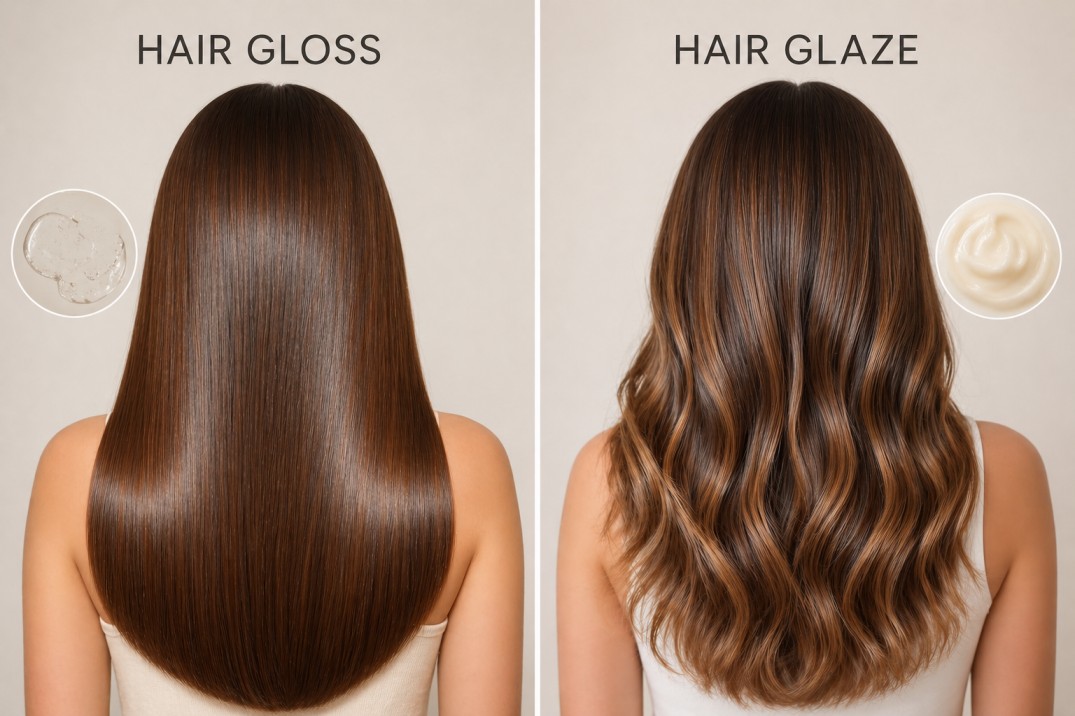
Hair gloss and hair glaze are not the same thing, and confusing the two is why so many Dallas clients book the wrong hair service and walk out disappointed.
The core difference: a hair glaze is a temporary shine treatment with no ammonia and no lasting color change. A hair gloss contains a small amount of developer, deposits pigment more deeply, and delivers both shine and tonal correction that lasts significantly longer. At Salon D in Dallas, TX, we match clients to the right treatment every day, and this guide makes that decision simple.
In this blog, we’ll explain the exact chemical and functional difference between hair gloss and hair glaze, what each treatment does to the hair structure, how long each lasts, which one suits your hair type and color goal, and what to expect at your appointment with Salon D hair services.
The Core Difference Between Hair Gloss and Hair Glaze
Let’s establish the technical distinction clearly, because the terms are used interchangeably in some salons and marketing contexts, and that inconsistency creates real confusion.
What Is Hair Gloss?
Hair gloss is a semi-permanent color treatment that enhances both the look and feel of your hair. It works on all hair types, whether your hair is natural or chemically treated, and helps boost shine, refine tone, and create a more dimensional, polished finish. It’s also known for smoothing frizz, improving dryness, and making hair feel healthier overall.
In simple terms, gloss acts like a toner. Some formulas adjust the tone of your hair, cooling down brassiness or adding warmth, while others are completely clear and focus purely on shine and smoothness. It can also revive faded color, slightly deepen your shade, or help blend minor gray hair.
Because most glosses contain a small amount of ammonia, they’re able to deposit color inside the hair cuticle. The result is longer-lasting shine, improved tone, and hair that looks moisturized and well-maintained.
Pro tip: Hair gloss isn’t just for colored hair. Clear gloss works beautifully on natural hair too, enhancing shine and smoothing the overall texture.
What Is Hair Glaze?
Hair glaze is a temporary, non-permanent treatment that coats the outer layer of the hair rather than penetrating it. It’s free from ammonia and peroxide, making it a gentler option that focuses more on shine and conditioning than color change.
Glazes can add a slight tint or refresh tone, but their main benefit is boosting shine and controlling frizz. Since they sit on the surface, they gradually wash out over time and don’t create long-term color changes.
They’re also versatile; you can use them to maintain highlights or even mix them with conditioner for at-home upkeep. For example, a gold glaze can help maintain warm tones that tend to fade between salon visits.
Hair gloss penetrates the hair cuticle to enhance tone, refresh color, and deliver longer-lasting results. Hair glaze sits on the surface, providing temporary shine and smoothness with minimal color change, making it a lighter, short-term treatment option.
What is The Difference Between Hair Gloss vs. Hair Glaze?
While hair glosses and hair glazes are very similar, a few key differences set them apart. Hair gloss is best for adjusting color, whether that means neutralizing brassiness, blending grown-out roots, or subtly shifting tone while also delivering a noticeable shine boost. In contrast, a hair glaze is more focused on enhancing shine and smoothing frizz, with only a slight hint of toning.
Key Differences Table
| Feature | Hair Gloss | Hair Glaze |
| Longevity | 4–6 weeks | 1–2 weeks |
| Color Impact | Enhances, tones, or adjusts color | Minimal or no color change |
| Penetration | Penetrates the hair cuticle | Coats surface only |
| Formula | May contain low ammonia | Ammonia- and peroxide-free |
| Purpose | Tone correction + shine | Shine + conditioning |
| Usage | Mostly salon-applied | Easy at-home use |
| Maintenance | Less frequent application | Needs frequent reapplication |
Some major differences include:
-
Longevity and Lasting Results
Hair gloss lasts significantly longer because it works within the hair cuticle, maintaining tone and shine for weeks. Hair glaze fades quickly since it only coats the surface and washes out faster.
-
Color Enhancement and Tonal Control
Gloss treatments can neutralize brassiness, deepen shades, or enhance undertones. Glazes offer only a slight tint, focusing more on shine rather than making meaningful or lasting color adjustments.
-
Depth of Penetration
Gloss penetrates into the hair structure, allowing it to modify tone from within. Glaze remains on the outer layer, meaning it cannot alter the hair’s internal color or structure.
-
Shine and Finish Quality
Both add shine, but glazes deliver a more immediate, high-gloss finish. Glosses provide a balanced result, shine combined with improved tone and depth for a more natural, dimensional appearance.
-
Hair Health and Conditioning Effects
Glazes primarily act as conditioners, smoothing the hair surface and reducing frizz. Glosses also improve texture but focus more on color enhancement alongside hydration and overall hair integrity.
-
Application and Accessibility
Hair gloss is typically applied in salons due to its formulation and processing requirements. Glaze products are widely available and simple to apply at home, making them convenient for regular upkeep.
-
Maintenance and Upkeep Needs
Gloss requires less frequent touch-ups due to its longer lifespan. Glaze, being temporary, needs regular reapplication to maintain shine and smoothness, especially with frequent washing.
-
Best Use Cases
Choose gloss for color correction, refreshing faded dye, or toning highlights. Opt for glaze when you want a quick shine boost, smoother texture, and a low-commitment treatment between salon visits.
When to Choose a Hair Glaze?
Choose a hair glaze when you want instant shine, smoothness, and frizz control without changing your color. It’s perfect before events, for maintaining fresh color, conditioning fragile hair, or trying a no-commitment treatment that fades quickly.
- Best for shine without altering color
- Ideal before weddings or photoshoots
- Perfect for fragile, over-processed hair
- Zero-commitment, temporary treatment
- Great between salon visits for maintenance
When to Choose a Hair Gloss?
Choose a hair gloss when your hair needs tonal correction, color refresh, or longer-lasting shine. It’s ideal after highlights, for fixing brassiness, enhancing faded color, or subtly shifting tone while improving overall depth, vibrancy, and hair uniformity.
- Best for toning and color correction
- Ideal after highlights or balayage
- Fixes brassiness effectively
- Enhances faded hair color
- Adds depth and longer-lasting shine
Gloss vs. Glaze for Different Hair Types
-
Fine Hair
Both gloss and glaze work well for fine hair by smoothing the cuticle and boosting shine, which helps hair appear fuller. Gloss is especially beneficial for processed fine hair, as it evens out porosity and creates a thicker-looking finish. Avoid heavy glaze formulas that may weigh strands down.
-
Thick and Coarse Hair
Thick, coarse hair naturally reflects shine but can resist tonal changes. Gloss may require longer processing to penetrate effectively, while both treatments provide much-needed hydration. These formulas help soften texture, reduce dryness, and improve manageability without compromising natural volume.
-
Curly and Wavy Hair
Curly and wavy hair often lacks natural shine due to its structure. Both gloss and glaze smooth the raised cuticle, enhancing shine and definition. Gloss is particularly effective for highlighted curls, helping unify tone and create a more polished, consistent look.
-
Chemically Processed or Damaged Hair
For damaged or over-processed hair, glaze is the safer option since it conditions without chemical penetration. Gloss can still be used carefully, but only after assessing hair health. When applied correctly, both treatments can improve texture, but glaze is the gentlest choice.
-
Color-Treated Hair
Color-treated hair benefits from both options. Glaze helps maintain shine between appointments without altering tone, while gloss refreshes and corrects color. Choosing the right gloss formula is key to enhancing existing color rather than unintentionally shifting it.
What Happens at Your Appointment at Salon D?
Knowing what to expect makes the experience more comfortable and the outcome more aligned with your expectations.
Glaze Appointment
A standalone glaze appointment at Salon D is typically completed in 30–45 minutes:
- Hair is shampooed and towel-dried
- The glaze formula is applied through the hair from roots to ends
- Processing time of 15–20 minutes (some formulas are heat-activated with a dryer)
- Rinse and blowout
- The finish is immediate, you’ll see the shine difference before you leave the chair
Gloss Appointment
A standalone gloss appointment takes 45–60 minutes, depending on hair length and density:
- Consultation on current tone, target tone, and any concerns
- Formula selection by the colorist, this is where the expertise lies
- Application throughout the hair or in targeted sections, depending on the goal
- Processing time of 20–30 minutes
- Rinse, condition, blowout, and style
- The result is visible immediately and continues to look great for 4–6 weeks as the formula settles
When gloss is applied as part of a highlight or balayage service at Salon D’s color services, it’s applied after the foils are removed and rinsed. It’s the final color step that gives the highlight result its intentional tone and shine.
FAQs:
What is the difference between hair gloss and hair glaze?
A hair glaze coats the outside of the hair cuticle for temporary shine with no color change, lasting 1–2 weeks. A hair gloss contains low-volume developer, deposits pigment inside the hair shaft, corrects tone, and lasts 4–6 weeks. Glaze is a shine and conditioning treatment; gloss is a semi-permanent color service that also delivers shine.
Does hair gloss damage hair?
Hair gloss uses 5–10 volume developer, the lowest strength used in professional color. At this developer strength, gloss is extremely gentle and does not cause the structural damage associated with higher-volume lightening. It is safe for most hair types including fine, fragile, and previously processed hair. For severely compromised hair, a glaze is an even gentler alternative.
How long does a hair gloss last in Dallas TX?
A professional hair gloss typically lasts 4–6 weeks in the Dallas climate. Fade rate is influenced by wash frequency, shampoo formula, heat styling, and sun exposure. Dallas’s sunny climate and hard water can accelerate fade using sulfate-free shampoo and UV protection for hair extends the result.
Is a hair gloss the same as a toner?
In professional usage, a toner applied after highlights is a gloss treatment; the terms are sometimes used interchangeably in salons. Both use a low-volume developer to deposit tonal pigment after lightening. The distinction is primarily in marketing language: toner is more commonly used in the context of post-highlight tonal correction, while gloss is used more broadly to include shine and conditioning benefits.
Can I get a hair gloss if I have natural hair with no color?
Yes. A clear or neutral hair gloss on natural, uncolored hair delivers all of the shine and conditioning benefits without any tonal shift. It’s one of the most effective treatments for adding visible shine and smoothness to natural hair. Salon D offers clear gloss as a standalone treatment for natural hair clients.
How often should I get a hair gloss in Dallas?
Most highlight and color clients benefit from a gloss appointment every 4–6 weeks between full color services. Natural hair clients with no color goals can schedule gloss as needed for shine and conditioning, typically every 6–8 weeks. Glaze appointments can be more frequent, given their shorter duration and zero chemical commitment.
What is a hair glaze good for?
A hair glaze is ideal for adding immediate shine, smoothing frizz, conditioning the cuticle, and enhancing the appearance of your current color without any tonal change or chemical commitment. It’s the right choice before events, between color appointments, for clients who want shine without color adjustment, and for fragile or damaged hair that isn’t ready for any developer-based treatment.
Does Salon D in Dallas offer hair gloss and glaze treatments?
Yes. Salon D offers both hair gloss and hair glaze treatments in Dallas. Gloss is available as a standalone color service through our color services menu and as an add-on to highlight and balayage appointments. Glaze is available through our conditioning and texture services. Our colorists assess each client’s hair and goals to recommend the appropriate treatment.
The Bottom Line: Which Do You Actually Need?
If you’re still uncertain after reading this guide, use these two questions to decide:
Do you need tonal correction, brassiness, color that’s faded to the wrong tone, or a shade adjustment? → Hair Gloss
Do you need shine and conditioning without any color change? → Hair Glaze
Most Dallas clients with highlighted or color-treated hair benefit from regular gloss appointments; they’re the professional solution that purple shampoo approximates but can’t replace. Glaze has its place as a shine refresh, a pre-event treatment, and a conditioning option for hair not ready for any chemical service.
At Salon D in Dallas, our colorists don’t default to a single service they assess your hair, understand your goal, and recommend the treatment that actually delivers what you’re looking for. Because the best result isn’t the most expensive service or the most intensive treatment, it’s the right one for your specific hair, right now.
Explore Salon D’s color services and conditioning treatments or book your consultation today and let our Dallas colorists recommend exactly what your hair needs.